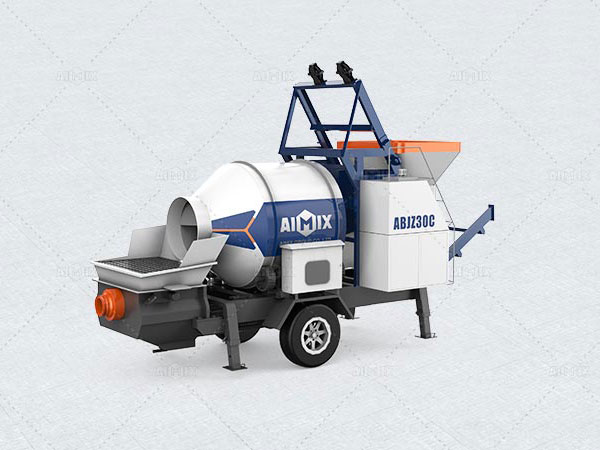
Concrete pump acquisition occupies a peculiar space in construction equipment economics. Unlike many assets where depreciation follows predictable, linear curves, concrete pumps exhibit a depreciation profile that can confound even experienced fleet managers. The gap between the purchase price and the eventual resale value—a gap that can represent hundreds of thousands of currency units—is often determined not by the machine’s age or hours alone, but by decisions made long before the first cubic meter is pumped. Buyers who approach acquisition focused solely on initial capital outlay frequently discover, five to seven years later, that their “bargain” concrete mixer pump machine commands a fraction of the resale value commanded by a competitor’s unit that carried a higher prprice tag at purchase. This depreciation trap is neither mysterious nor inevitable. It is the product of identifiable factors: brand reputation, serviceability, regional market preferences, and the machine’s technological trajectory relative to industry evolution. Understanding these factors before signing the purchase agreement transforms resale value from an unpredictable outcome into a manageable variable, enabling buyers to calculate not merely the cost of ownership but the net cost after recovery—the figure that ultimately determines whether an asset delivered genuine returns.
In the concrete pump market, brand equity is not merely a marketing concept; it is the single most significant determinant of resale value. Premium European manufacturers—Schwing, Putzmeister, CIFA—consistently command higher residual percentages than their Asian or domestic counterparts, often retaining 40 to 50 percent of original value after five years of service, compared to 20 to 30 percent for lesser-known brands. This disparity reflects the used equipment market’s unforgiving calculus: buyers of used pumps prioritize parts availability, documented serviceability, and a proven track record of durability. A pump from a manufacturer with established distributor networks, readily available spare parts, and a reputation for engineering longevity will always find a broader pool of buyers willing to pay a premium. Conversely, pumps from manufacturers without local support infrastructure often languish on the used market, their lower initial price erased by the difficulty of finding buyers willing to assume the risk of orphaned equipment. For contractors who view their fleet as a portfolio of assets rather than a collection of tools, the premium paid for established brands represents not an expense but an investment in predictable capital recovery.
Beyond global brand reputation, resale value is shaped by regional market dynamics that vary significantly across territories. A pump configuration highly valued in one market may be considered undesirable in another, and the initial buyer’s understanding of their local resale market determines their ultimate recovery. In Southeast Asian markets, for instance, trailer-mounted pumps with specific output ranges command stronger residuals than truck-mounted units due to local project profiles and rental market preferences. In Middle Eastern markets, desert-spec cooling packages and telematics integration have become expected features that distinguish premium resale candidates from discounted units. The buyer who acquires a machine configured for their immediate project needs without considering the preferences of the future buyer—who may be operating in the same regional market or exporting the machine—effectively surrenders control over a significant portion of the machine’s value. Prudent buyers conduct not only project-specific configuration analysis but also resale market research, aligning their specifications with the features that historically command premium pricing in their region’s used equipment ecosystem.
Perhaps no factor influences used concrete pump pricing more than the quality and verifiability of the machine’s service history. A pump with a complete, documented maintenance record—including hydraulic oil analyses, wear part replacement logs, and engine service records—can command a 15 to 25 percent premium over an otherwise identical unit with incomplete documentation. This disparity reflects the used buyer’s need to assess risk. A pump with verifiable records offers a transparent view of its operating life, enabling the buyer to evaluate wear patterns, identify previous issues, and project remaining component life. A pump without such records is a gamble, and the used market prices that gamble accordingly. Buyers who intend to optimize resale value must establish, from the first day of operation, a documentation discipline that treats service records as assets equal in importance to the hardware itself. Digital record-keeping systems that log every service event, every component replacement, and every operating hour create a provenance that distinguishes premium resale candidates from the mass of undifferentiated used equipment.
The condition of high-wear components—concrete cylinders, transfer tubes, wear plates, and hydraulic pumps—disproportionately influences used pump valuation. A machine that has operated with deferred maintenance, where wear components have been allowed to degrade beyond recommended limits, presents a buyer with a substantial immediate capital outlay to restore the machine to reliable operation. Conversely, a pump sold with recently replaced wear components and documented evidence of preventive maintenance positions itself as a turnkey asset, commanding a concrete mixer with pump price that reflects its immediate deployability. Buyers who plan for resale from the outset schedule wear component replacement not as a reactive expense but as a strategic investment timed to maximize the machine’s value at disposition. This approach treats maintenance expenditure not as a cost to be minimized but as an investment in capital preservation, ensuring that the machine presented to the used market is one that invites premium offers rather than lowball bids from buyers factoring in substantial recommissioning costs.
.jpg)
The accelerating pace of technological integration in concrete pumps has introduced a new variable into resale calculations: technological obsolescence. Machines equipped with telematics, remote diagnostics, and advanced control systems are increasingly commanding premiums in the used market, while units lacking these features are experiencing accelerated depreciation as buyers prioritize connectivity and data integration. This trend is self-reinforcing; as rental fleets and contractor operations standardize on telematics-enabled equipment, machines without these capabilities become increasingly difficult to place, their pool of potential buyers shrinking with each passing year. Buyers evaluating new pump acquisitions must consider not only the immediate utility of available technology packages but also the trajectory of market expectations. A mini concrete pumping machine purchased without telematics may save capital at acquisition but will face a used market five years hence where telematics is considered a baseline expectation rather than a premium feature. The buyer who accounts for this trajectory makes a different calculation, viewing the incremental cost of advanced technology as an investment in maintaining the machine’s relevance and, consequently, its resale value.
The final element of resale planning is timing. Concrete pumps do not depreciate linearly; they follow a curve characterized by steep initial depreciation followed by a period of relatively stable value, then a secondary decline as major component replacements loom and technological obsolescence accumulates. Identifying the optimal disposition window—typically between five and seven years for well-maintained premium machines—requires not only understanding the machine’s condition but also anticipating market cycles. Disposing of a pump during a period of high construction activity, when rental rates are strong and contractors are expanding fleets, can yield substantially better returns than selling during a downturn when used equipment floods the market. Buyers who incorporate exit timing into their initial acquisition strategy—structuring financing to align with projected disposition windows, maintaining machines to maximize value at the target sale date—position themselves to recover the maximum possible percentage of their original investment. In the calculus of concrete pump economics, the difference between a buyer who falls into the depreciation trap and one who avoids it is not luck; it is the difference between acquiring a machine and acquiring a carefully managed asset, with resale value engineered from the outset.